Wastewater treatment plants (WWTPs) are a crucial piece in the complex puzzle that is urban infrastructure. Like any other such undertaking, they also consume electricity as part of their operation. But how much electricity does a wastewater treatment plant use? Is it a significant amount, one worth considering, or is it a drop in the ocean? In this article, we’ll delve into the nitty-gritty of wastewater plant energy consumption to understand this better.
Energy Use Overview
Although it might seem insignificant at first, the energy usage of wastewater treatment plants is far from trivial. According to a report from the United States Environmental Protection Agency (EPA), these institutions consume about 3% of the total electricity in the US, equivalent to 21 billion kWh annually. That’s no small number, is it? Now, this might lead you to ask, what exactly inside a WWTP uses all this electricity?
Breaking Down Power Consumption
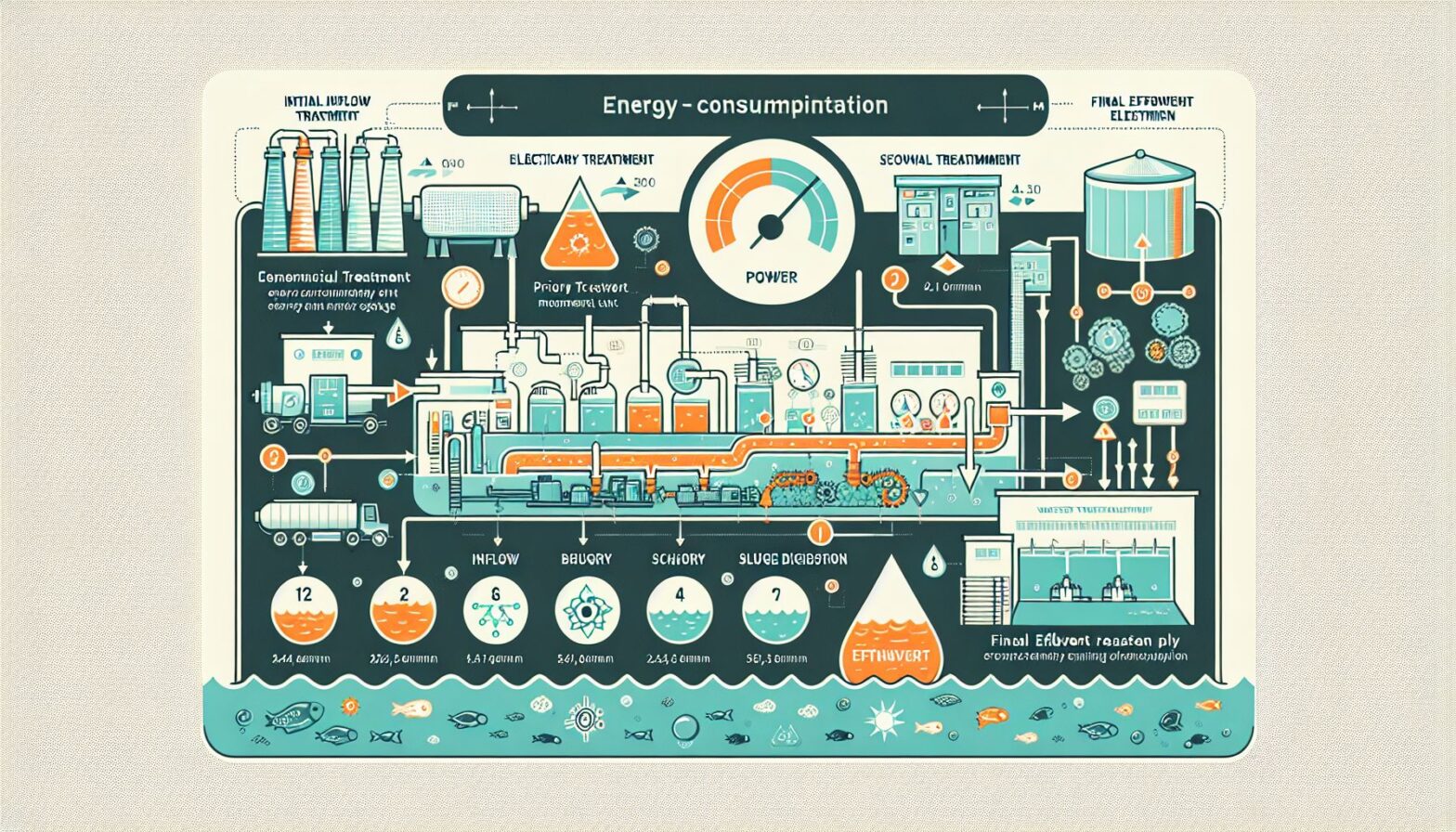
There are several key processes involved in the treatment of wastewater, each with its energy demands. Generally, three main processes account for approximately 60% of the entire electricity consumption of a typical wastewater treatment plant:
- Aeration: This process of pumping oxygen into wastewater to foster the growth of beneficial microorganisms consumes about half of the entire energy used in the plant.
- Pumping: Moving wastewater through the plant requires force, which consumes electricity. Pumping accounts for about 10% of the plant’s total energy usage.
- Ultraviolet (UV) disinfection: UV light destroys harmful bacteria and viruses, ensuring the treated water is safe to discharge or reuse. This accounts for around 35% of the plant’s electricity consumption.
So, how much does this translate to in tangible numbers? For an average size plant treating around 10 million gallons per day (MGD), the treatment costs would amount to roughly 4,800 kWh per day or 1.75 million kWh annually. Staggering, wouldn’t you say?
It’s About Efficiency, Not Just Consumption
Yet, the focus is not just on how much electricity a WWTP uses, but also how efficiently it uses it. For example, recent advancements in energy-efficient technologies have reduced the energy footprint of aeration processes by up to 50%.
Moreover, some WWTPs have even turned into net energy producers by harnessing biogas – a by-product of the treatment process. Anaerobic digestion processes produce this gas, which, when burned, is a potent source of energy. With the right infrastructure, it can be used to generate heat and electric power, reducing a plant’s reliance on the grid.
Future Trends in Wastewater Plant Energy Consumption
Given the climate realities we face today, improving the energy efficiency of WWTPs has never been more critical. Looking forward, there are several emerging trends in this arena.
One example is the implementation of smart grids. These systems can monitor and adjust electricity consumption in real-time, creating efficiencies and reducing waste. Upgrading existing infrastructures with variable frequency drives (VFDs) for pumps and fans can also result in significant energy savings.
Innovations in biological nutrient removal (BNR) processes are also exciting developments. Some BNR technologies, such as the anaerobic ammonium oxidation (Anammox) process, can reduce the energy usage of nutrient removal by up to 60%.
It’s exciting to see where these developments are heading, isn’t it?
Wrapping Up
From the aeration tanks to the UV disinfection chambers, energy use in wastewater treatment plants is a significant factor. It’s not just about the sheer quantity of electricity consumed, but also about how efficiently the plants use that electricity. With advancements in technology and a pressing need for climate-friendly solutions, the future of wastewater plant energy consumption is surely bound to evolve in a sustainable manner.
So, the next time you hear the distant hum of a wastewater treatment plant during a late-night stroll, you’ll have a better grasp on the profound relationship between water treatment and energy consumption. After all, appreciation of such complexities is the first step towards a more sustainable future, wouldn’t you agree?