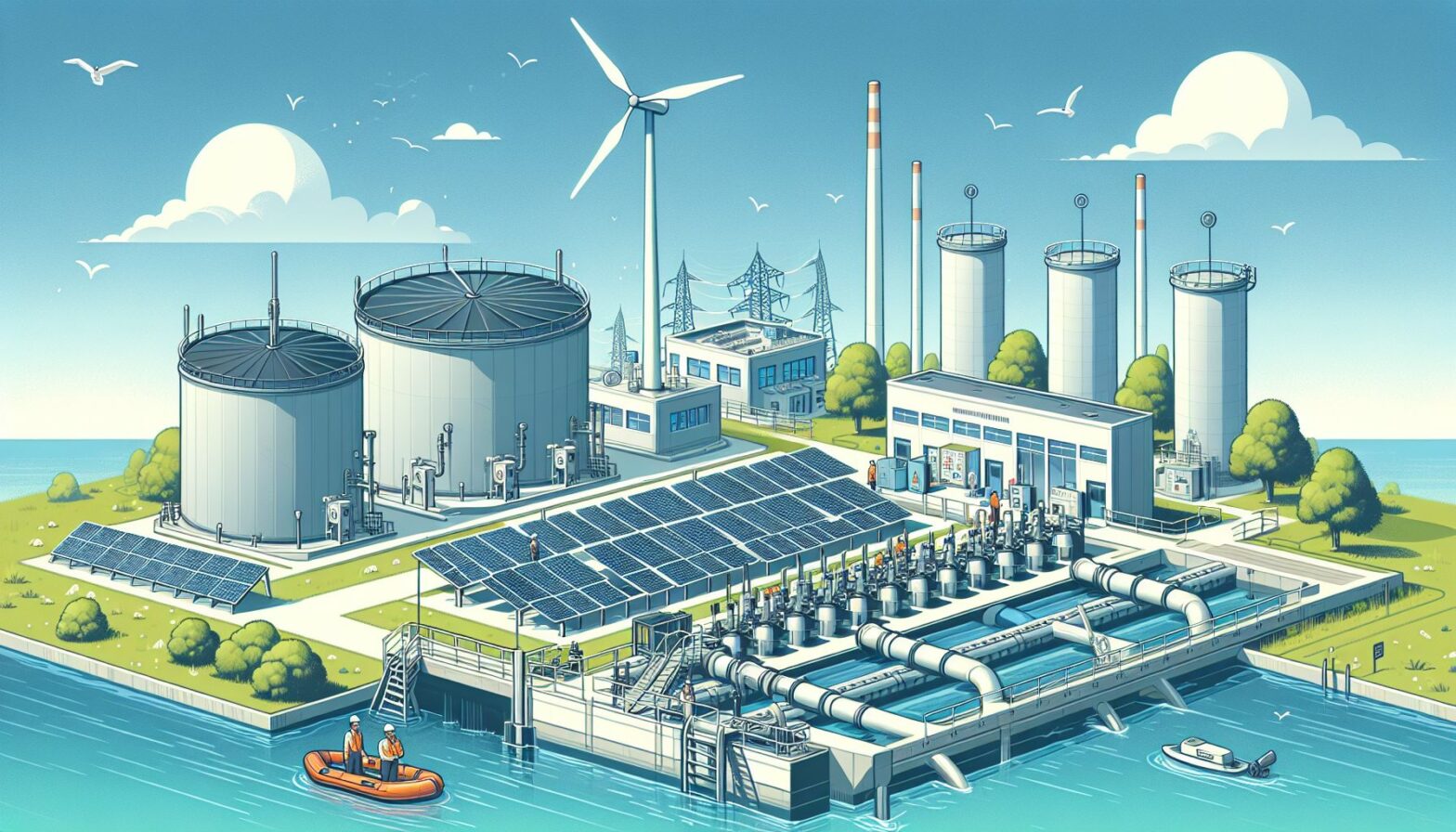
As we navigate the intersections of two primary global challenges – energy sustainability and water security– we are pushed to explore more efficient and sustainable solutions. One such solution is leveraging renewable energy in water treatment operations. This intersection lies the robust potential for curbing the adverse climate impacts, ensuring water security, and promoting a sustainable shift in energy use.
The Intersection of Renewables and Water Treatment
Increase in human population and industrial expansion inevitably intensify the pressure on our captured water reserves, subsequently leading to the prioritization of efficient water treatment systems. Water treatment operations, however, are energy-intensive and contribute significantly to global greenhouse gas emissions. Therefore, connecting water treatment to renewable energy sources becomes an essential step in mitigating environmental damages.
Harnessing the power of renewables, such as solar, wind, hydropower, geothermal and bioenergy, provides an opportunity to offset the carbon emissions associated with conventional energy used in water treatment processes. The application of renewable energy sources in water treatment has the potential to drive down the cost of operation while increasing energy efficiency.
Renewable Energy Applications in Water Treatment Operations
Many water facilities around the world are already shifting towards renewable energy to drive their water treatment processes. According to the International Renewable Energy Agency (IRENA), integrating renewable energy in water services could save up to 8% of total global energy consumption by 2040.
Solar Power Integration
Solar power integration in water treatment has witnessed rapid growth over the years, more so in arid regions with abundant sunlight. Solar-driven desalination, for instance, combines the principles of solar thermal energy and desalination, thus providing an innovative solution to water scarcity problems.
In the same vein, solar photovoltaic (PV) technology is increasingly being implemented to power water treatment facilities. The high initial investment can be offset with zero fuel costs and reduced maintenance expenditures over the system’s lifecycle.
Examples abound of successful solar-powered water treatment facilities. Morocco, for instance, has launched the world’s largest seawater solar desalination plant. Even in many rural communities across Africa, solar PV-powered boreholes and water purification systems have brought about a positive change.
Hydropower and Wind Energy Utilization
In regions with reliable wind patterns or significant topographical or flow variations, wind and hydropower are viable options. Micro and pico-hydro power systems have demonstrated efficiency in pumping and purifying water to cater to the needs of small communities. When installed in existing water infrastructure, these systems have the potential to generate surplus energy that can further be interconnected to the local grid.
Wind turbines, on the other hand, can directly power water pumping systems, often with battery storage for a continuous water supply. According to a case study conducted by the Mississippi State water engineering department, a water supply company in South Africa uses wind power and energy-efficient pumping systems to desalinate groundwater, providing a stable water supply to over 200,000 locals.
Harnessing Bioenergy
Another interesting pathway to explore is the utilization of bioenergy in wastewater treatment plants. Anaerobic digestion is a commonly used bioenergy technology where biogas (a mixture of methane and carbon dioxide) is produced from the organic content of the wastewater. This biogas can be harnessed to produce heat and electricity, thereby offsetting the energy needs of the treatment plant. In the forward-thinking city of Copenhagen, Denmark, for example, wastewater treatment facilities produce 50% more energy than they consume, thanks to the use of bioenergy.
Navigating the Challenges and Looking Ahead
While the benefits of renewable energy integration in water treatment are unmistakable, it’s not without challenges. High initial investment costs, technological complexities, sustainability of energy source based on regional geography and weather patterns, and lack of trained personnel are barriers to a wider and swifter adoption. Therefore, capacity building, technological advancements, favorable policy frameworks, and public-private partnerships are vital.
Water treatment and renewable energy are two areas that are going to play a pivotal role in the future. As these two dimensions of sustainable development converge, we, as a society, need to make optimal use of this evolution. It paves the way for a more sustainable future – a future where clean water is democratized, and renewable energy sources are the norm, not the exception.
Advancing Technology and Policy Support: The Way Forward
Emerging technologies such as artificial intelligence (AI) and machine learning bring exciting possibilities for optimizing renewable energy management in water treatment. These technologies can help predict energy generation based on weather patterns, automate system controls for efficiency, and provide real-time performance data to help preemptively address system issues.
Drawing up supportive policies and incentives for the adoption of renewable energy technologies in water treatment will also be critical. Policymakers need to create an enabling environment that encourages innovation and investment in this field. Strategic partnerships between government agencies, academic institutions, technology developers, and utility providers are crucial.
In conclusion, the integration of renewable energy into water treatment is more than just a prospective solution to global challenges. It’s a step towards a sustainable future. It’s a pursuit that possesses great potential for innovation and transformative change, and one that should indeed be embraced with both hands. The world in which we navigate is changing, and it is in our collective interests to ensure that we not only keep up but lead the way.