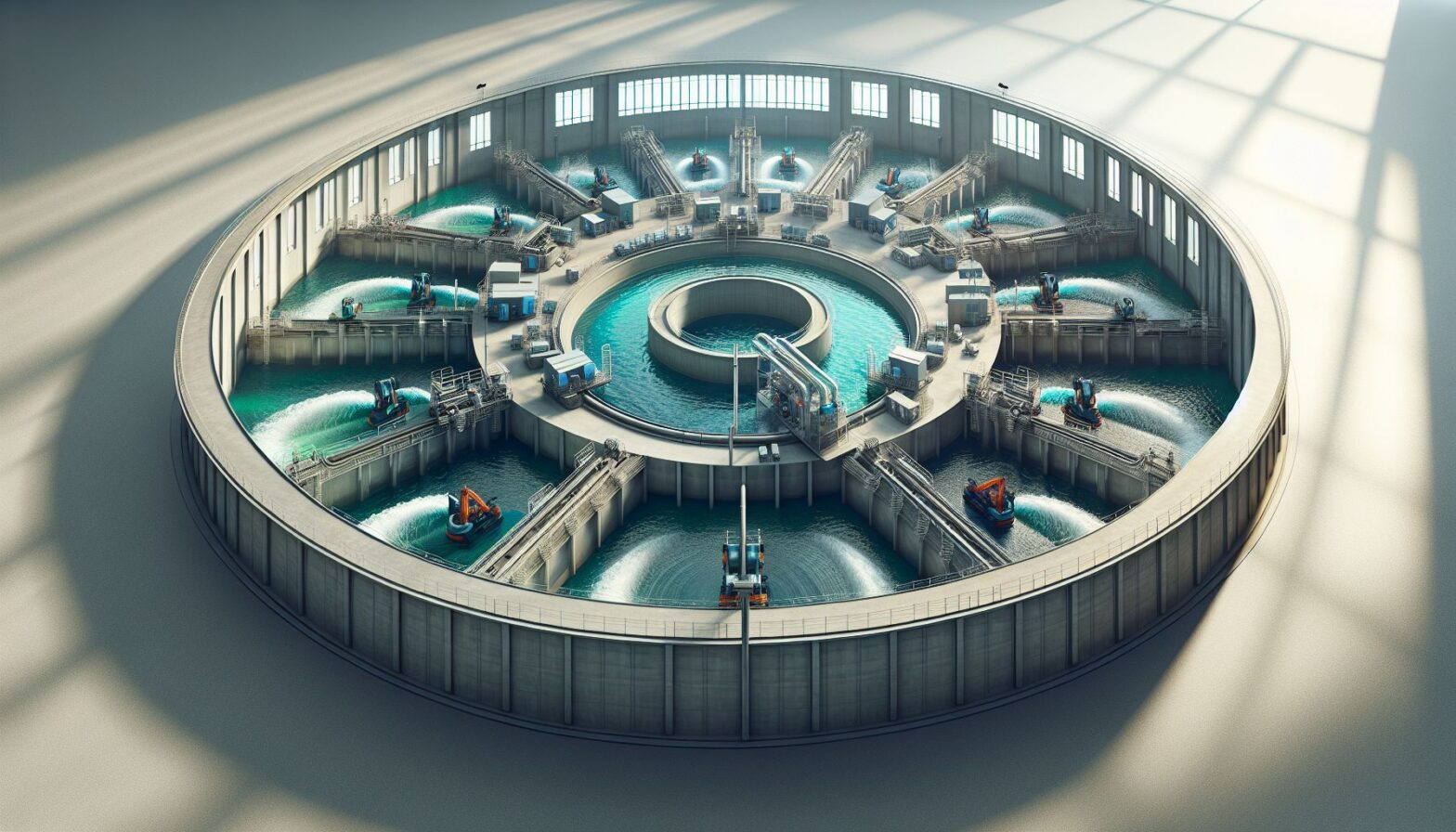
Wastewater treatment is among the most important public health advancements of our time, contributing significantly to the maintenance of clean, safe water supplies. Central to this process is the use of equalization tanks, a critical component that helps manage the flow and load variations of wastewater coming into a treatment plant. But what exactly is an equalization tank, and why is it so crucial in wastewater treatment? In this article, we’ll unravel the workings of equalization tanks and explore their importance for this fundamental process.
The Concept of Equalization Tanks
The primary function of an equalization tank in a wastewater treatment plant is to act as a buffer, managing the variations in wastewater inflows before the wastewater undergoes treatment. Due to the diverse sources of wastewater, such as residential, commercial, and industrial establishments, the flow and load variations can greatly differ.
Imagine a concert band preparing for a performance. If the musicians begin playing as soon as they arrive, the music will be disorganized and chaotic. However, if they gather together in a single place and start the performance together, the music becomes harmonious. This is similar to the role of an equalization tank, where wastewater from various sources is collected and equilibrated before treatment. This pre-process ‘harmonizing’ helps in enhancing the overall efficiency of the subsequent wastewater treatment processes.
Why are Equalization Tanks Important?
Equalization tanks aid in numerous ways to optimize the wastewater treatment process. One critical role they play is in diluting the strength of the inflow by evening out any sharp deviations in temperature, pH, or concentration of contaminants. This dilution factor is critical to prevent potential shocks to the biological organisms in the treatment process, which are often sensitive to sudden changes.
Take for instance, manufacturing industries that dispose wastewater laden with toxic substances or heavy metals. These contaminants, if introduced suddenly into the treatment process, could greatly hamper the effectiveness of the biological treatment stage. An equalization tank is thus used to gradually introduce these contaminants, avoiding a sudden detrimental impact and ensuring the effluent quality is kept consistent.
Furthermore, given the chance to slow down in the tank, some solids in the wastewater may even settle down at the bottom. This phenomenon helps in decreasing the solid load on the subsequent treatment steps.
Equalization Tank Design
The operational efficiency of a wastewater treatment plant depends largely on the equalization tank design. Based on the capacity of the treatment plant, the number of wastewater sources, and their variations, the design of the equalization tank changes. Generally speaking, the tank needs to be designed to provide appropriate retention time, which is essentially the length of time the wastewater spends in the tank, to account for variable inflow and foul loads.
The design also involves the balance between static and dynamic conditions. Too static, and the tank will fail to mix the wastewater properly, leading to a lack of homogeneity. Too dynamic, and there could be issues with turbulence leading to resistance to flow. Hence, most design strategies aim for a balance of these two conditions by incorporating mixers and aerators.
It’s not rare for equalization tanks to have monitoring systems installed, with instruments analyzing parameters like pH, temperature, and conductivity, among others. These real-time data assist operators in adjusting the treatment process as needed.
From Sizing To Operation: The Case of Equalization Tanks
Let’s take an example. A large industrial plant that manufactures certain types of paints discharges wastewater containing high concentrations of organic pollutants. By installing an equalization tank, the plant manages to protect the downstream treatment facilities from getting overwhelmed during peak discharge periods. The tank size is determined based on the maximum incoming flow rate, hourly variation, and retention time required for proper mixing and equalization. It is also designed with systems that constantly monitor the influent quality and regulate the discharge rate into the next processing units.
Over time, the equalization tank proves its worth by enabling a steadier, more efficient operation of the overall wastewater treatment system. It protects the sensitive microbial populations used in the biological treatment stage from toxic shocks, allows for better adjustment of chemical dosages in the chemical treatment stage, and improves the performance of mechanical systems such as pumps and motors.
Moving Forward: Innovations in Equalization Tanks
Like any other sector, wastewater treatment is evolving with advancements in technology and innovations are in the offing for equalization tanks as well. The future of equalization tanks lies in smart controls and automation, leveraging artificial intelligence and digital analytics for real-time control and optimization. Such a system would be able to respond to variations in wastewater quality and quantity even more efficiently, minimizing the need for manual intervention and reducing energy consumption.
Conclusion
In conclusion, equalization tanks form an indispensable part of the treatment of wastewater. With their diligent function in managing inflow variations, these tanks not only ensure the effluent quality but also significantly enhance the overall operational efficiency of the treatment processes. The steady evolution of these tanks, adapting to the changing demands of the industry, is sure to bring exciting changes as we look to the future of wastewater treatment.