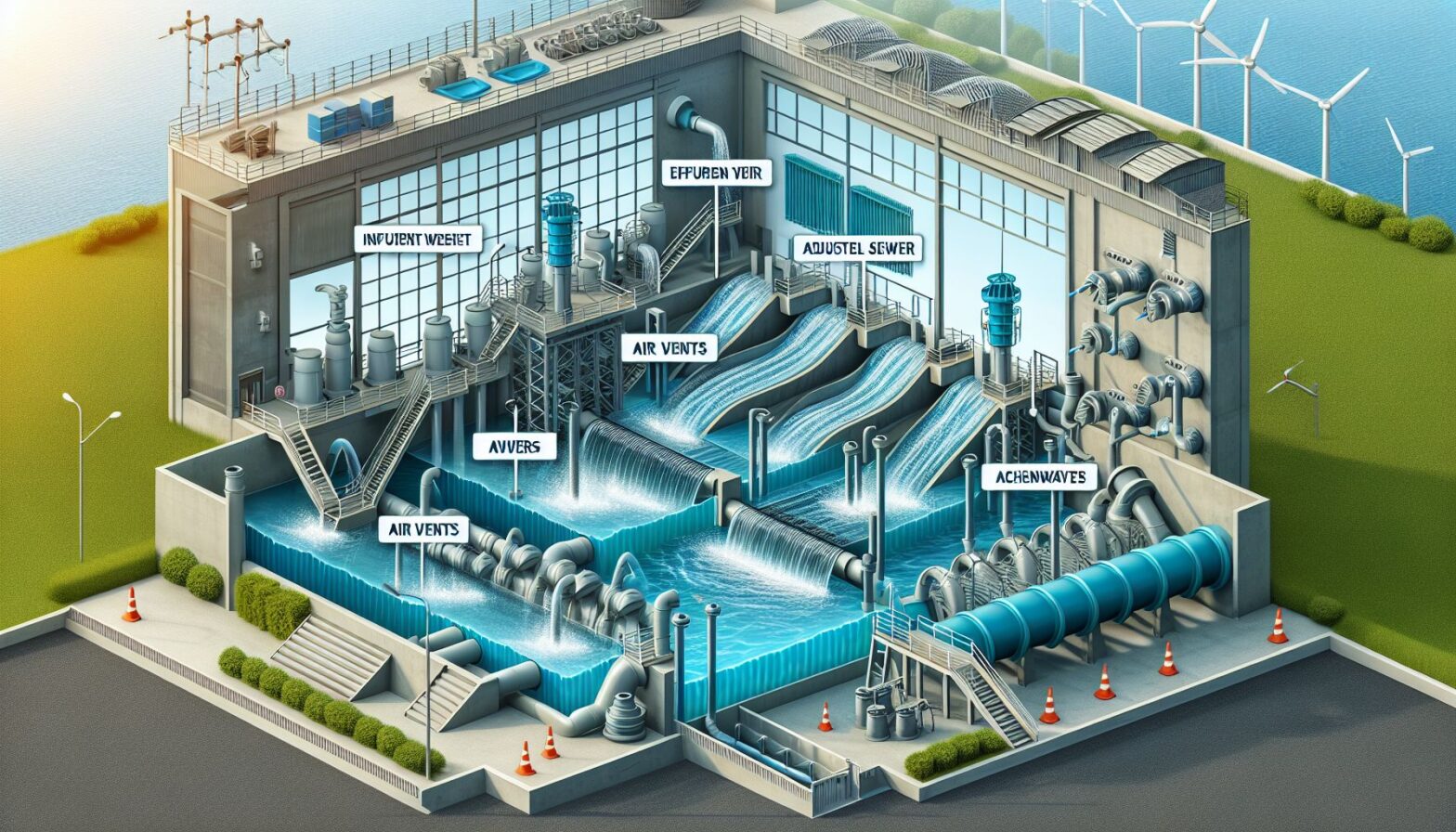
In wastewater treatment processes, consistency is key. Fluctuations in flow rates and pollutant concentration can significantly affect efficiency, leading to subpar treatment results. This is where flow equalization steps into the picture. It’s an innovative technique designed to rectify this inconsistency by balancing wastewater flow and pollutant levels. Does that paint a clear picture for you? Let’s venture further into the design principles involved, particularly focusing on storage tanks, a key component.
Understanding Flow Equalization
Flow equalization is a process used extensively in wastewater treatment plants to regulate the flow and concentration of inlet wastewater. By buffering this incoming wastewater, the process ensures smoother operations downstream, minimizes hydraulic overloads, and enhances plant performance.
Remember swimming in a pool with a wave machine? It churned out waves at regular intervals, right? Now, think of a flow equalizer as a buffer zone that tends to quell those waves, presenting a calm, steady flow.
The Link between Flow Equalization and Storage Tanks
Storage tanks are an integral element in flow equalization providing the necessary ‘holding space’ for the wastewater. This storage capacity enables the tank to absorb peak flows, release them during off-peak periods, and ensure constant flow for treatment.
The Louisiana water quality department, for example, stipulates very specific regulations on flow equalization and storage tank design. These guidelines intend to ensure that all wastewater treatment facilities maintain optimal efficiency and protect the state’s water resources from pollution.
The nuts and bolts of tank design are dictated by factors like target flow rates, projected lifespan, local environmental conditions, and even available land. Wondering how storage tank design is executed to ensure efficient flow equalization? Hold on, we’re getting there!
Principles of Storage Tank Design
Designing a storage tank for flow equalization is a critical process involving multiple parameters. Let’s explore the main ones.
Tank Volume
The primary criterion is to determine the volume of the tank. This depends largely on the inflow rate, the variance in flow rates, and the desired outflow rate. Simply put, it’s about having enough ‘storage’ to handle the incoming flow during peak periods.
Basin Configuration
Next comes the basin configuration. This includes the shape (rectangular, circular, etc.), depth, and orientation of the tank. Each design brings its own pros and cons like ease of construction, floor space, and maintenance requirements.
Inlet and Outlet Design
The design of inlet and outlet structures has a direct impact on flow characteristics. These must be engineered to facilitate smooth, even flow distribution and minimize short-circuiting.
Materials and Construction Methods
Finally, the selection of suitable materials and construction methods based on durability, cost, local regulations, and other factors is another crucial consideration.
Each of these principles interacts and impacts one another. A small misstep in one could lead to significant operational challenges down the line.
Real-World Examples of Storage Tank Design
Let’s look at a real-life scenario. The City of Portland, Oregon, constructed two 25-million-gallon underground storage tanks to manage combined sewer overflows. The tanks’ design incorporated precast concrete segments, considering their longer lifespan and cost-effectiveness. But that’s not all. Their inlets and outlets were tactically designed to minimize overflow, ensuring seamless execution of flow equalization.
Another case is the Seine-Normandy, Europe’s largest wastewater treatment plant, which uses a multichamber flow equalization basin with a total working volume of 240,000 cubic meters. The design facilitates distributed inflow and enables precise flow control, underlining the complex but vital interaction of design principles.
Future Trends in Flow Equalization and Storage Tanks
Flow equalization and storage tank design is an evolving science. The industry is gradually moving towards intelligent systems that utilize real-time data, automation, and predictive analytics.
For instance, there is growing interest in adaptive storage tank designs that can dynamically adjust volumes based on incoming flow rates. So, could ‘smart tanks’ be the future of flow equalization? Only time will tell.
Concluding Thoughts
In the end, wastewater treatment is about more than just removing pollutants. It’s about designing and engineering a system that can continuously deliver optimal results, rain or shine. The process of flow equalization and storage tank design embodies that mentality, combining scientific knowledge, engineering prowess, and practical wisdom. As with any engineering challenge, the aim is always to make the complex simple, the erratic steady, and the unpredictable reliable. And that’s what we aim for, one tank at a time.